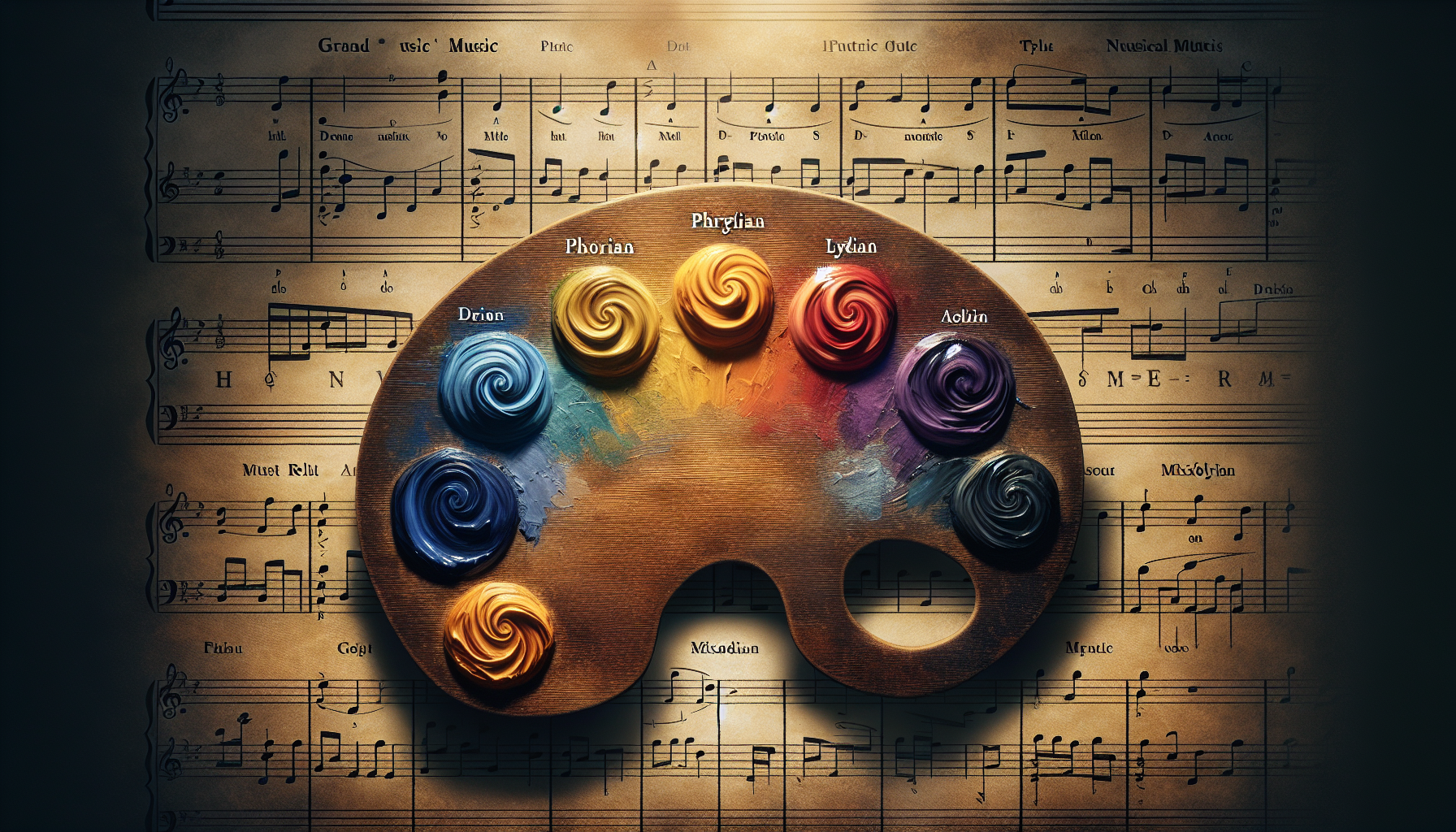
Music has an extraordinary ability to evoke emotions and transport us to different emotional landscapes. One of the fundamental tools musicians use to convey emotions is the concept of musical modes. These modes are like a palette of colors that composers and performers use to paint emotional landscapes in their music. In this blog post, we will delve into the world of musical modes and explore the different emotions they can evoke.
Understanding Musical Modes
Before we dive into the emotions evoked by musical modes, let’s briefly understand what they are. Musical modes are a set of scales with specific patterns of intervals. There are 7 modal scales and chances are you already know two of them. The Major Scale is the Ionian mode and Natural Minor Scale is the Aeolian mode. They are used to create melodies, harmonies, and moods in music. There are several modes, each with a unique emotional character, and they are often rooted in cultural and historical contexts.
- Ionian Mode (Major)
The Ionian mode, which is essentially the major scale, is perhaps the most recognized and widely used musical mode. It is associated with feelings of happiness, joy, and positivity. Its bright, uplifting sound is often used in music to convey triumph, celebration, and optimism. A perfect example of this can be found in Beethoven’s “Ode to Joy.”
- Dorian Mode
The Dorian mode has a somewhat bittersweet and bluesy quality. It’s often used to evoke a sense of nostalgia, longing, and reflection. Jazz musicians often employ the Dorian mode to create a melancholic and introspective atmosphere in their compositions.
- Phrygian Mode
The Phrygian mode is characterized by its exotic and mysterious sound. It’s often used to convey suspense, tension, and even danger. Composers like Maurice Ravel have utilized the Phrygian mode to create a sense of unease in their music.
- Lydian Mode
The Lydian mode has an ethereal, dreamlike quality. It is associated with feelings of wonder, otherworldliness, and transcendence. This mode is often used to create a sense of floating or soaring in music and is a favorite in soundtracks for fantasy and science fiction films.
- Mixolydian Mode
The Mixolydian mode has a bluesy, rock-and-roll feel. It is often used to convey a sense of rebelliousness, excitement, and high energy. Songs like “Sweet Home Alabama” by Lynyrd Skynyrd are great examples of the Mixolydian mode in action.
- Aeolian Mode (Natural Minor)
The Aeolian mode, which is essentially the natural minor scale, is often used to evoke sadness, introspection, and melancholy. It’s a common choice for expressing emotions of sorrow, loss, and heartache.
- Locrian Mode
The Locrian mode is the darkest and most dissonant of all modes. It’s often used to convey chaos, fear, and instability. While it is relatively rare in traditional Western music, it finds its place in avant-garde and experimental compositions.
Music is a powerful art form that transcends language and directly speaks to our emotions. The choice of musical modes is a crucial element in shaping the emotional landscape of a piece of music. By understanding the emotional qualities associated with each mode, we can better appreciate the nuances and intentions behind the music we listen to. Whether it’s the exuberance of the Ionian mode, the nostalgia of the Dorian mode, or the darkness of the Locrian mode, musical modes provide a rich tapestry of emotions for both creators and listeners to explore and connect with. So the next time you’re listening to your favorite song, pay attention to the mode it’s in – it might just reveal a whole new layer of emotion.





Leave a Reply