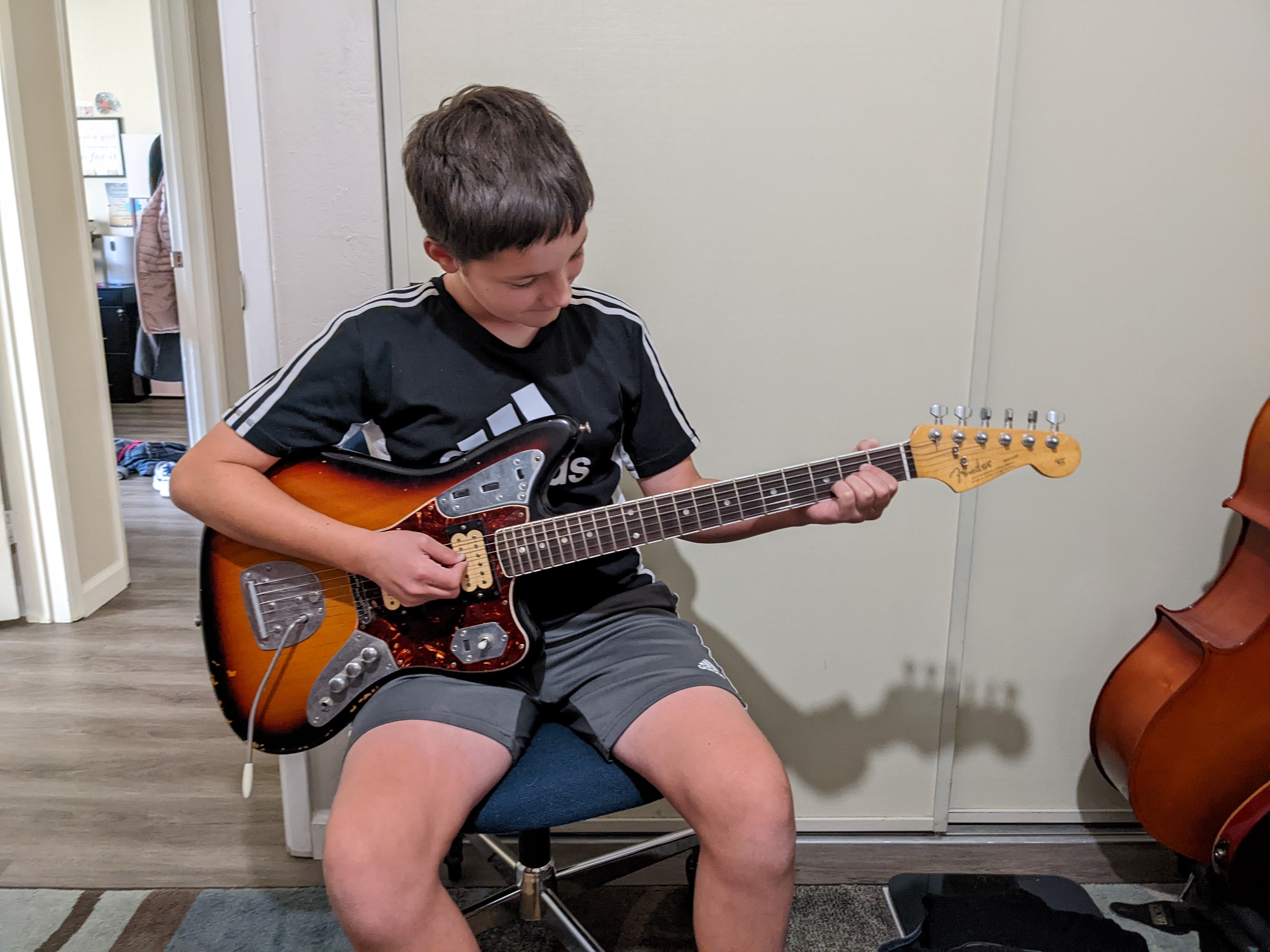
Are you in the market for an electric guitar and overwhelmed with the designs, costs, configurations? Rest assured that this article will match you up with a guitar you’ll love in 5 simple steps.
First thing, set a budget. A healthy beginner electric guitar budget is around $300. You will find many highly playable instruments at this price point including Squire by Fender and Epiphone by Gibson. Spending more will usually get you a better instrument, but not always!
Second decide what Pick-ups you want. The two main options are Single Coil and Humbucking Pickups. Some guitars have both! Single Coil pick-ups as found most famously on Fender Stratocasters or Telecasters have a sound that’s great for blues, rock, and funk. Single coil pick-ups are bright and clear and some guitars have switches to pair two pickups to get a humbucker effect. A humbucker pick-up is most recognizably found on a Gibson Les Paul or SG guitar. Humbuckers are two single coils wired in series to cancel out any hum created by electrical interference. Humbuckers tend to be a little heavier sounding and are favored in genres like Hard Rock, Metal, and Punk.
Fourth, consider options like a hardtail bridge or tremolo or a Maple or Mahogany fingerboard if offered. Tremolos can make tuning a real pain for beginners but it also might be on your must-have list. Maple is known to have a brighter sound if that’s what you’re going for.
Fourth and most importantly, feel the guitar in your hands. Block off an hour or two and get into your local guitar shop. You may be surprised to find that the most perfect guitar on paper just feels wrong in your hands. Can you sit with it comfortably? Is it well balanced when standing with a strap or does the neck feel heavy?
Finally consider what you’ll be playing through. While this article is specifically about choosing an amplifier, it’s important to consider how you’ll use your new guitar. If you think you’ll be playing in a band someday, a 2 x 12″ speaker set and amp with 50 watts of power got the job done for me for years. I strongly advise you consider only amplifiers that have an effects loop. Guitar amplifiers typically consist of two-stages; a pre-amp which gives your guitar the amplifiers signature sound and a power-amp stage to boost the pre-amp signal. The Effects Loop routes the preamp signal through your effects and back into the amp for final amplification. It also gives you the option to bypass the pre-amplifier stage entirely (especially if the pre-amp isn’t all that great) and use a digital effects and amp modeler to craft your own signature sound.





Leave a Reply